Tow-in repair help
Transmission Trouble? Have It Towed, Not Driven
Slipping gears, harsh shifts or a car that won't move in drive usually need a specialist. We haul the vehicle on a flatbed so the gearbox isn't turning on the way.
- Open 24/7, 365 days
- Flatbed-only fleet
- Price quoted before dispatch
- Licensed & insured
How this works: Auto Lyft USA is a towing company, not a repair shop. We tow your car to an independent partner shop (or any shop you choose), and that shop diagnoses, quotes and does the repair.
An automatic transmission uses pressurized fluid, clutch packs and a computer to choose gears; a manual relies on a clutch you work with your left foot. When something goes wrong you may feel a delay before the car engages, an engine that revs without the car speeding up, a hard bang between gears or a refusal to move at all. Low or burnt fluid is behind a surprising share of these complaints, though worn clutches, failed solenoids and torque converter faults are common too.
Transmissions punish drivers who push on. A slipping gearbox builds heat quickly, and heat breaks down the fluid that protects every internal part, so a problem a shop could fix with a solenoid or valve body can become a full rebuild after one more trip. If the car won't engage, slips under load, flashes a transmission warning or leaves reddish fluid under the middle of the car, stop driving. Towing with drive wheels on the road can do harm too, which is why the type of truck matters here.
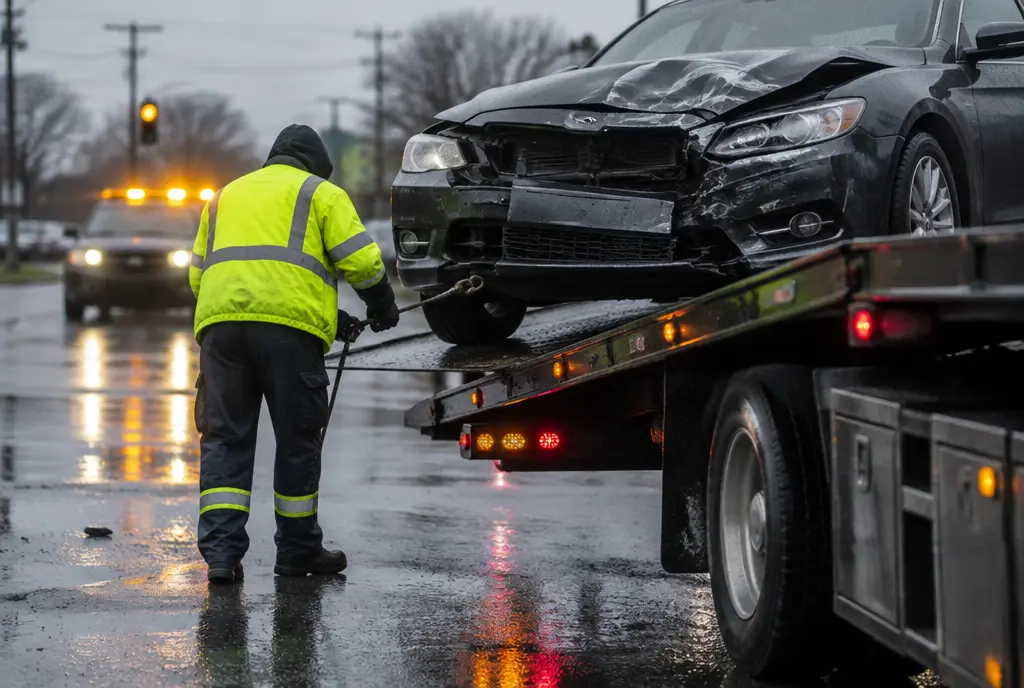
Auto Lyft USA does not open up or rebuild transmissions. We bring a flatbed, winch the car up onto the deck and take it to the transmission specialist or general shop you pick. Without a shop in mind, the dispatcher can name an independent partner that handles drivetrain work, and that shop gives you a written estimate before any repair. Our AWD towing guide explains why some vehicles must ride on the deck.
What the shop typically handles
Fluid level and condition check
The technician checks the level and inspects the fluid itself; dark, burnt-smelling or gritty fluid says a lot about what is happening inside.
Transmission code scan
Modern automatics log faults for speed sensors, shift solenoids and line pressure, and reading them narrows down where to look.
Solenoid and valve body work
Shift solenoids and the valve body that routes fluid can often be replaced without pulling the transmission out of the car.
Clutch replacement on manual cars
A slipping or chattering clutch is replaced along with the pressure plate and release bearing, and the flywheel is inspected.
Rebuild or replacement options
When internal parts are worn, the shop lays out the choice between rebuilding the unit and installing a remanufactured or used one.
Mount and axle inspection
Clunks blamed on the transmission sometimes come from broken mounts or worn CV axles, so those are checked as part of the diagnosis.
Signs it's time to get it looked at
- Engine revs climb but the car doesn't pick up speed
- Long pause after shifting into drive or reverse
- Hard clunk or jolt between gears
- Car stuck in one gear or in limp mode
- Red or brown fluid spots under the middle of the car
- Whining or buzzing that changes with road speed
- Burnt smell after a drive, especially uphill or while towing
Transmission Repair: questions
Can I keep driving with a slipping transmission?
It is a gamble. Slipping means the clutches inside are not holding, and each slip produces heat and wear. Some cars limp along for weeks; others stop engaging altogether on the next drive, sometimes in the middle of traffic. The longer it continues, the more likely a simple fix turns into a rebuild. If the slip is new, park the car and have it towed to a shop that can check the fluid and codes.
Why does the type of tow matter for a transmission problem?
Towing a car with its drive wheels rolling on the pavement spins parts of the transmission while the engine is off, so the internal pump is not supplying lubrication. For AWD and 4x4 models, even two wheels rolling on the road can strain the drivetrain. We use flatbeds for every tow, so the whole car rides on the deck and nothing turns on the way.
Do you rebuild transmissions?
No. We are a towing company and our drivers do not repair vehicles. We carry the car to a transmission specialist, your general mechanic or an independent partner. Whoever receives it tests it, explains what it found and gives you a written estimate before work starts. The shop also sets its own terms for the work it performs, so ask them directly about anything that comes with the repair.
What does a transmission repair usually cost?
The range is enormous, from a fluid service or a single solenoid to a complete replacement, so no honest number exists before diagnosis. We never quote repair prices. After a diagnosis, the shop hands you a written estimate, and you decide whether to proceed. The towing charge is separate and comes from our published card; the rates page lists hook-up and per-mile pricing.
My car won't go into drive at all. Is that always the transmission?
Not always. A broken shifter cable, a failed brake-shift interlock, a bad range switch or very low fluid can each keep a car from engaging, and some of those are simple fixes. Either way, a car that won't move has to be carried. Tell the dispatcher it will not shift, and the driver will pull it onto the flatbed with the winch.
Can you move the car to a second shop for another opinion?
Yes. Transmission estimates can differ a lot, and plenty of owners want a second look before approving a rebuild. Once the first shop releases the car, we pick it up and deliver it to the next one. Let us know the hours of both shops so pickup and drop-off line up, and the dispatcher will quote the trip before the truck goes out.
Should I check my transmission fluid myself?
If your car has a transmission dipstick, checking it the way the owner's manual describes is a quick way to spot low or burnt fluid. Many newer cars have sealed units with no dipstick, and those need a shop to check the level correctly. Low fluid almost always means a leak, so topping it off is only a short-term step before an inspection.
Car can't make it to the shop?
We tow it there on a flatbed and the shop takes it from there.
Related repair help
Getting the car there
Where the trucks start
All four carriers start and finish the day on Harrisburg Pike (US-62) on Columbus's southwest side. Call around the clock, 365 days a year.
1620 Harrisburg Pike
Columbus, OH 43223
Phone: (614) 633-8163
Email: lisa@autolyftusa.online
Directions to the yard